| Main page |
| New visitors |
| Buyer's guide |
| The instruments |
| Technique |
| Lessons |
| Performers |
| Recordings |
| Books |
| Forum |
| Links |
| Site map |
| Site last updated . This particular page was created 16/11/2003 and last updated 28/08/2004 Site updates |
| This site is sponsored by: Apollo's Axes Barnes & Noble.com Jingoloba Music123 Musician's Friend Sheet Music Plus |
These rhythms aren't much used in irish music (except for jigs and they are a special case), but it's something every banjo player ought to know anyway.
The offbeat rhtyhm is a combination of damping and 8th notes like this:

This rhythm is especially useful if you have two (or more) accompaniment instruments - one playing the beats, the other the offbeats.
Adding the first beat
With offbeats alone the basic rhythm can easily be lost. We can correct that by adding the first beat in the bar as well:
I call this the "Proud Mary" rhythm after the famous Creedence Clearwater Revival tune that uses it extensively.
Offbeat variations
By now we've gone trhough all the rhythm patterns you are likely to need for Irish music. If traditional music from the British isles is all you are interested in, you should go on to the next page...... or we can have some fun with the offbeats while we're at it. Here are some common variants:
"Bass rhythm"
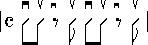
One of the most fundamental rhythms for a bass player. Quite handy for somebody laying down the chords as well.
1-3-4
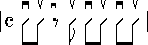
I sometimes call it the "Lion King" rhythm, but to be honest I'm not sure if I got it right. The way it's played here it doesn't sound anything like the Lion King theme rhythm anyway. You have to add a swing feel for that.
2-4 with upbeat
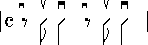
Used a lot in reggae and elsewhere too.
2-4 with all offbeats

Play everything but the 1 and 3. This is really a comobination of the 2-4 with upbeat and the reggae rhythm.
"Short" claves rhythm
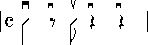
One of the most fundamental rhythms in afro-american music (rock, blues, jazz etc.).
3-claves rhythm
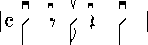
Often called the "calypso" rhythm.
3-2 claves rhythm (variant 1)

Now we're really getting into latin-american music. It's called "3-2" because we play twice in the first bar and thrice in the second
3-2 claves rhythm (variant 2)

2-3 claves rhythm (variant 1)

Now we're really getting into latin-american music.
2-3 claves rhythm (variant 2)

Samba rhythm
