| Main page |
| New visitors |
| Buyer's guide |
| The instruments |
| Technique |
| Lessons |
| Performers |
| Recordings |
| Books |
| Forum |
| Links |
| Site map |
| Site last updated . This particular page was created 16/11/2003 and last updated 28/08/2004 Site updates |
| This site is sponsored by: Apollo's Axes Barnes & Noble.com Jingoloba Music123 Musician's Friend Sheet Music Plus |
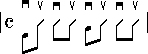
So far we've only played on the beat. That can get a bit boring in the long run, so maybe we should try to fill in with some chords between the beats too? These "offbeats" are played with an upstroke, and we notate them with eight notes:
The idea is that the right hand keeps beating the rhythm all the time and simply hits the strings on the way up as well as down.
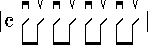
A very good exercise for everybody who plays rhythm on a stringed instrument is to alternate between four-on-the-floor bars and upbeat bars:

But, this is just an exercise, you don't want to play this in a band.
In fact you don't want to use the steady eight-note rhythm at all in irish music. Four-on-the-floor was more than heavy enough, and this is even worse.
Combined fourth/eight note rhythms
What we do is combine eight note figures with plain beat such as: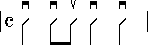
Here we have eight notes on the second beat, but that's just an example, we can use them anywhere in the bar:

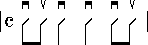
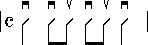
and so on...
Even a single fourth note on the first beat is enough to lighten up the rhythm sufficiently:
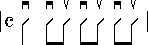
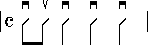
There are two alternatives you ought to be careful with though, eight notes on ther first beat only:
and on the fourth beat only:
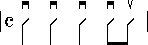
These two rhythms are strongly associated with dixieland and cha-cha music respectively, and that makes them tricky to use on other music styles. I don't say you can't use them, only that you should be careful.
Eight notes with basses
Of course we can combine the "bass notes on first and third beat" idea with eight note figures, such as: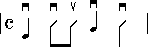
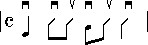
and so on.
With some bass notes added we can even play eight note rhtyhm throughout without getting too heavy-handed: