| Main page |
| New visitors |
| Buyer's guide |
| The instruments |
| Technique |
| Lessons |
| Performers |
| Recordings |
| Books |
| Forum |
| Links |
| Site map |
| Site last updated . This particular page was created 16/11/2003 and last updated 28/08/2004 Site updates |
| This site is sponsored by: Apollo's Axes Barnes & Noble.com Jingoloba Music123 Musician's Friend Sheet Music Plus |
The most important thing when you play accompaniment on a banjo (or on any other instrumen for that matter) is to keep a steady beat. It goes like this:

Play everything with dowstrokes, keep a steady tempo and try to get all beats as identical as possible. This is what jazz musicians often call "four on the floor" rhythm.
Bass notes
The four-on-the-floor rhythm can get a little bit too heavy for irish music when played on a banjo. To lighten it up a bit, we can play just a single bass note on the first and third beat: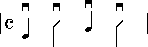
In this example we play the fourth string on beat one, a full chord on beat two, the third string on beat three and a full chord again on beat four. This is probably the most common way to play this rhythm, but sometimes it might be better to swap the bass notes and play the first beat on the third string and the third beat on the fourth string....
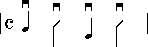
...or simply stick to one bass string throughout:

Upbeat
Many tunes begin with an upbeat. Usually we can just ignore it for the accompaniment and just start on the first beat of the first bar: