| Main page |
| New visitors |
| Buyer's guide |
| The instruments |
| Technique |
| Lessons |
| Performers |
| Recordings |
| Books |
| Forum |
| Links |
| Site map |
| Site last updated . This particular page was created 20/11/2003 and last updated 28/08/2004 Site updates |
| This site is sponsored by: Apollo's Axes Barnes & Noble.com Jingoloba Music123 Musician's Friend Sheet Music Plus |
Telemann was one of the earliest composers who are known to have written mazurkas. It became popular during the 19th century when pop music composers like Chopin started pouring out loads of wonderful mazurkas, and it soon became a regular dance all over Europe. It wasn't perhaps as much of a hit in Ireland as in some other countries, but it's still become a natural part of the traditional music of the green isle. The mazurka is often mistaken for a waltz, but the two rhythms are really very different.
Basic mazurka rhythm
The mazurka is in 3/4 time just like the waltz:
Tempo and Feel
The stereotypical mazurka features two bar periods emphasizing the first beat of bar one and the second of bar 2:
The irish mazurka tend to have a smooth "gliding" feel. The special maxurka accentuation is till there, but perhaps not as apparent as in mazurkas from other countries. The tempo is relatively high - try 180 beats per minute.
Rhythm patterns
A pattern with eight notes on the second and third beat might be a good place to start: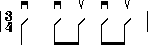
You can also try playing the second beat straight and eight notes on the first and third:
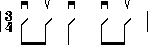
By alternating between the two, you emphasize the characteristic mazurka two-bar feel:

If you really want to bring out the mazurka feel, you can even try playing just the first and second beat of every other bar:

This may be a bit over the top though, and should be used sparingly - such as in the last bar of an 8 bar phrase.