| Main page |
| New visitors |
| Buyer's guide |
| The instruments |
| Technique |
| Lessons |
| Performers |
| Recordings |
| Books |
| Forum |
| Links |
| Site map |
| Site last updated . This particular page was created 16/11/2003 and last updated 28/08/2004 Site updates |
| This site is sponsored by: Apollo's Axes Barnes & Noble.com Jingoloba Music123 Musician's Friend Sheet Music Plus |
In irish music the waltz rhythm is mainly used for songs, so you probably won't get to play many instrumental waltzes on an irish banjo. That of course means that good rhythm playing becomes even more important.
Basic waltz rhythm
The waltz is in 3/4 time, that is it has three beats to the bar:
Tempo and Feel
A waltz can be played in a wide range of tempi, from about 170 beats a minute (or perhaps even slower) up to 200 or more.The feel varies a lot from nation to nation and even from region to region. On the British isles - and especially in England - they tend to play it fairly straight with a strong first beat and with light and very slightly delayed second and third beats.
You can empasize this by using upstrokes on the second and third beat:
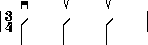
Don't overdo this. It's more of an English thing than an Irish, and the last thing a proper irishman want is to sound English ;-)
Rhythm patterns
You can accompany a waltz by simply playing the three beats as above, but that might not sound too good. Here are some alternatives:Bass notes
A very common way to accompany a waltz is to play a bass note on the one and chords on the two and three: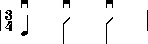
Combine this with the upstrokes on second/third beats and you get a very light French or Western Norwegian sounding waltz. Maybe not the best idea in this context.
Fill-in chords
Maybe this one is the best pattern for Irish waltzes: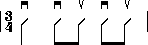
As I said, Irish waltzes are usually songs. To be more specific, they are usually drinking and/or "tough guy" songs. A raunchy rhythm like this may be the perfect choice. If you think it's too heavy, you can tone it down slightly by playing a single bass note on the first beat:
