| Main page |
| New visitors |
| Buyer's guide |
| The instruments |
| Technique |
| Lessons |
| Performers |
| Recordings |
| Books |
| Forum |
| Links |
| Site map |
| Site last updated . This particular page was created 16/11/2003 and last updated 28/08/2004 Site updates |
| This site is sponsored by: Apollo's Axes Barnes & Noble.com Jingoloba Music123 Musician's Friend Sheet Music Plus |
Basic march rhythm
The march can be notated in common time: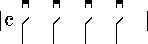
in cut time:
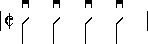
in 2/4:

or in 6/8:
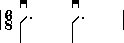
Tempo and Feel
The irish march is played slightly slower than what you'd usually expect in a marching band. About 110 beats per minute should be about right. 6/8 marches tend to be a bit faster, perhaps 120 bpm.There are also some slow marches with an even lower tempo (90 beats per minute or less) and a distinctive dotted feel.
Rhythm patterns
Bass notes on the beats and chords on the offbeats may be the most obvious way to play rhythm to a march. You can play it with downstrokes only: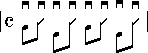
or with alternating down- and upstrokes:
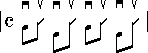
The two alternatives give the rhythm a slightly different feel.
You can also try playing the offbeats only:

This alternative is expecially useful if there are other rhythm instruments in the band as well, but don't rule it out even if you're holding down the accompaniment alone.
Variations
The steady "marching" beat is one of the most central characteristics of the march, so we should be careful not to mess it up. You could try to add some 16th note ornaments here and there though, such as: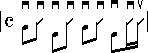
If you're feeling adventurous, you may even throw in a triplet here and there - especially if it is a slow march.
2/4 marches
There's really no difference between the marches notated in 2/4 time and the ones in common or in cut time - they are all just different ways to notate the same thing.6/8 marches
A 6/8 march can be played more or less as a jig, only with a more accentuated and less fluent feel.The most useful rhythms for a 6/8 march are bass notes with chords:

