| Main page |
| New visitors |
| Buyer's guide |
| The instruments |
| Technique |
| Lessons |
| Performers |
| Recordings |
| Books |
| Forum |
| Links |
| Site map |
| Site last updated . This particular page was created 16/11/2003 and last updated 28/08/2004 Site updates |
| This site is sponsored by: Apollo's Axes Barnes & Noble.com Jingoloba Music123 Musician's Friend Sheet Music Plus |
Basic hornpipe rhythm
The modern hornpipe is usually notated in cut or in common time: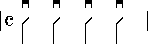
sometimes in 2/4 time with the 8th note as the beat:

Tempo and Feel
A hornpipe is slightly slower than a reel (about 180 beats per minute) with strongly accentuated beats and very distinctive triplet or even dotted feel.Sometimes the eight note rhtyhm is notated with dotted notes:
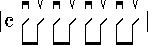
sometimes they're notated as even ones:
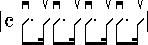
This is just a matter of notation though. You play the hornpipe with the same feel in both cases.
The 2/4 hornpipe notation is also just a case of notation. Everything is notated with half the note values - fourth notes in common time becomes eight notes in 2/4 time, eight notes become sixteenth notes and so on. Some musicians tend to play 2/4 horpipes with a slightly faster beat, but the difference isn't that big and it's not an absolute rule anyway.
Rhythm patterns
The two most useful basic strumming patterns for a hornpipe is the bass note-chord pattern: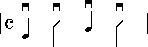
the "Drunken sailor" pattern:
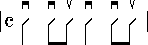
and a combination of the two:
 or
or 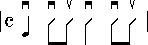
just like the reel.
You may also want to add eight notes on the third beat: